Stop Fasting, Start Fueling: How Skyr + Coffee Transforms Midlife Fat Loss
Let’s talk about the breakfast chaos — and why your morning routine — not your metabolism — is keeping you stuck, and how a protein-rich breakfast helps your hormones, energy, and belly fat finally work with you, not against you.
Be honest: what does your morning really look like? A rushed coffee, half a piece of toast, maybe nothing at all before the first meeting or school drop-off. You tell yourself you’re “just not hungry yet” or that you’ll eat later — because who has time for breakfast?
But here’s the problem: for women in their 30s, 40s, and 50s, this is one of those sneaky habits that feels harmless and like an old habit but messes with your entire system.
When you wake up, your body naturally releases cortisol — your built-in “get up and go” hormone. That’s good and that’s normal. It’s supposed to peak early and then gently drop through the day.
But when you grab coffee and nothing else, caffeine hits that cortisol wave like gasoline on a campfire. Your blood sugar shoots up, insulin follows, and a few hours later you crash — exhausted, edgy, and craving carbs.
The good news: that’s not a lack of discipline. That’s just your physiology trying to survive a chemical rollercoaster. And for women in peri- and menopause, the ride is even bumpier. Estrogen used to buffer cortisol — now that safety net is thinner. So your stress hormones hit harder, your blood sugar swings wider, and suddenly that “just coffee” morning habit feels like running on fumes.
The fix isn’t complicated. You don’t need a fancy green smoothie or a ten-step, insta-ready morning routine. You just need real food: protein, fiber (!), and healthy fats. Something that tells your body, “You’re safe. You’re fed. You can relax.”
That’s where Skyr comes in. Skyr is Icelandic yogurt, it’s thick and high in protein. It’s technically a strained dairy product, meaning most of the lactose (the part many people struggle with) is filtered out.
Here’s what you get in a single serving of about 170 to 200 grams: around 20 grams of protein, 5 to 8 grams of carbs, virtually no fat, plus calcium, vitamin B12, and riboflavin for bone and energy metabolism. It’s naturally really low in lactose.
In short: it’s a nutrient-dense, high-protein, low-sugar food that keeps your blood sugar steady, your muscles fed, and your hunger quiet. And unlike many trendy “functional foods,” Skyr’s benefits are backed by actual science — not Instagram quotes.
Let’s debunk some Skyr myths:
Timing:
The myth says: “Skyr spikes insulin — eat it only at night.” Or, “Men shouldn’t eat it for breakfast.” Or, “Women handle it better than men.” No, not true, this is bro-science.
Here’s the truth: yes, Skyr (like all protein) triggers a mild insulin response — because your body uses insulin to get nutrients into cells. That’s how metabolism works. There’s zero evidence that eating Skyr in the morning is harmful or that it behaves differently in men versus women.
In fact, research shows the opposite. High-protein breakfasts increase satiety and improve blood-sugar regulation. Yogurt and Skyr after training support lean mass and muscle repair. Regular yogurt consumption is linked to lower risk of type 2 diabetes.
“Skyr is just yogurt rebranded.”
The myth says: Skyr is the same as Greek yogurt — it’s just marketing.
Here is the truth: Both are strained dairy products, but their cultures and textures differ. Skyr is technically a fresh cheese (set with rennet and live cultures) with slightly higher casein protein and lower fat. Greek yogurt is a strained yogurt — higher in whey, tangier, and often higher in fat depending on the brand.
Why it matters: Skyr is naturally lower in lactose — often easier on digestion.
And so this leads to the next myth: “Dairy equals lactose intolerance.” The fact is: Because Skyr is strained several times, most of the lactose is removed. It usually contains less than 0.2–0.5 g of lactose per 100 g — similar to hard cheese. Even many people with lactose sensitivity tolerate it well.
“Skyr is low-fat, so it’s automatically better.”
The myth: Fat-free equals healthy.
The truth: Fat isn’t the enemy — and a small amount of dietary fat (nuts, seeds, nut butter) helps absorb fat-soluble vitamins (A, D, E, K). Skyr’s low fat content is fine, but don’t eat it “naked.” Pair it with healthy fats to make it metabolically complete.
“Skyr is acidic and causes inflammation.”
The myth: All dairy is inflammatory or acidifying.
The truth: High-quality dairy products, especially fermented ones like Skyr, are not inflammatory for most people. In fact, multiple studies show fermented dairy improves gut microbiota and may lower CRP (a marker of inflammation).
When and how to eat Skyr
In the morning: start your day with Skyr plus fiber and healthy fats — oats, nuts, seeds, and fruit. Add coffee if you want, but have it WITH your food, not before. This stabilizes cortisol, prevents the mid-morning crash, and keeps your brain focused instead of hangry.
After training: Skyr is basically your muscle-recovery insurance. The casein and whey blend supports protein synthesis and calcium supports muscle contraction and bone health.
In the evening: a small bowl before bed gives you slow-digesting protein for overnight repair — especially helpful if you train hard or have restless nights.
Let’s talk coffee,
because we’re not quitting it (unless you want to!)— we’re just getting smarter about it.
Caffeine activates cortisol and glucagon — your “mobilize energy” hormones. When you have coffee on an empty stomach, you add fuel to that fire. Your body thinks you’re running from danger (or a toddler with missing shoes).
But when you have coffee with breakfast — especially one that includes Skyr — you change the story. Now caffeine enhances focus and metabolism without the cortisol crash. You get steady energy, not a stress response disguised as motivation.

Does staying fasted “burns fat”?
Some women skip breakfast completely and stay fasted until lunch. And sure, you’ll hear that fasting “burns fat,” “improves focus,” or “keeps insulin low.”
Here’s the reality: fasting isn’t automatically bad. But it’s not automatically beneficial either — especially not for women in peri- or menopause whose hormones, stress systems, and recovery needs work differently than men’s.
When you stay fasted through the first half of the day, your body keeps cortisol elevated longer to maintain energy. That can feel fine for a while — alert, driven, productive — until it doesn’t. Eventually, that constant cortisol output comes with a cost: sleep issues, fatigue, cravings, and yes, more belly fat.
Because chronically high cortisol signals your body to store fat (especially around the abdomen) and break down muscle for fuel.
That’s the opposite of what you want for strength, longevity, or body composition.
Research consistently shows that women who eat a protein-rich breakfast have better body composition, more stable blood sugar, and lower waist circumference than those who fast until noon. Protein early in the day tells your metabolism, “We’re safe. We have fuel. Build, don’t store.”
How to know if skipping breakfast isn’t serving you
You need coffee to feel awake but crash by late morning; you’re more irritable, anxious, or “wired but tired”; afternoon or evening cravings hit hard; your sleep feels lighter or more restless; you’re training hard but not seeing the muscle tone or recovery you expect; your belly fat seems resistant despite clean eating.
If that’s you, your body is whispering: feed me with nutrient-dense food before you caffeinate me.
It sounds counterintuitive — but eating a high-protein breakfast actually supports fat loss and lean muscle better than fasting for most women. You lower cortisol sooner, stabilize insulin, and give your body the signal to burn instead of store.
That’s the magic of nourishment over deprivation: it feels calm, not forced. And the best: you don’t need any willpower.

Adding grapefruit or grapefruit juice to breakfast isn’t just aesthetic — it’s biochemical strategy.
Adding grapefruit or grapefruit juice to breakfast isn’t just aesthetic — it’s biochemical strategy.
Grapefruit supports blood sugar: studies show it can help lower post-meal insulin and improve sensitivity.
It also supports your cortisol curve: according to Andrew Huberman and cortisol research, grapefruit contains compounds that slow down the breakdown of cortisol. That means your natural morning rise stays active a bit longer, giving you more calm, focused energy through the morning.
And it’s a micronutrient boost: vitamin C, potassium, and antioxidants all help with collagen, immunity, and cellular repair.
Just one caution — grapefruit interferes with some medications, like statins or thyroid meds, so if that applies to you, check with your doctor before making it a daily ritual.
Once estrogen starts to fluctuate, cortisol regulation and insulin sensitivity change too. That’s why you might feel fine skipping breakfast in your 20s — but crash hard doing it in your 40s.
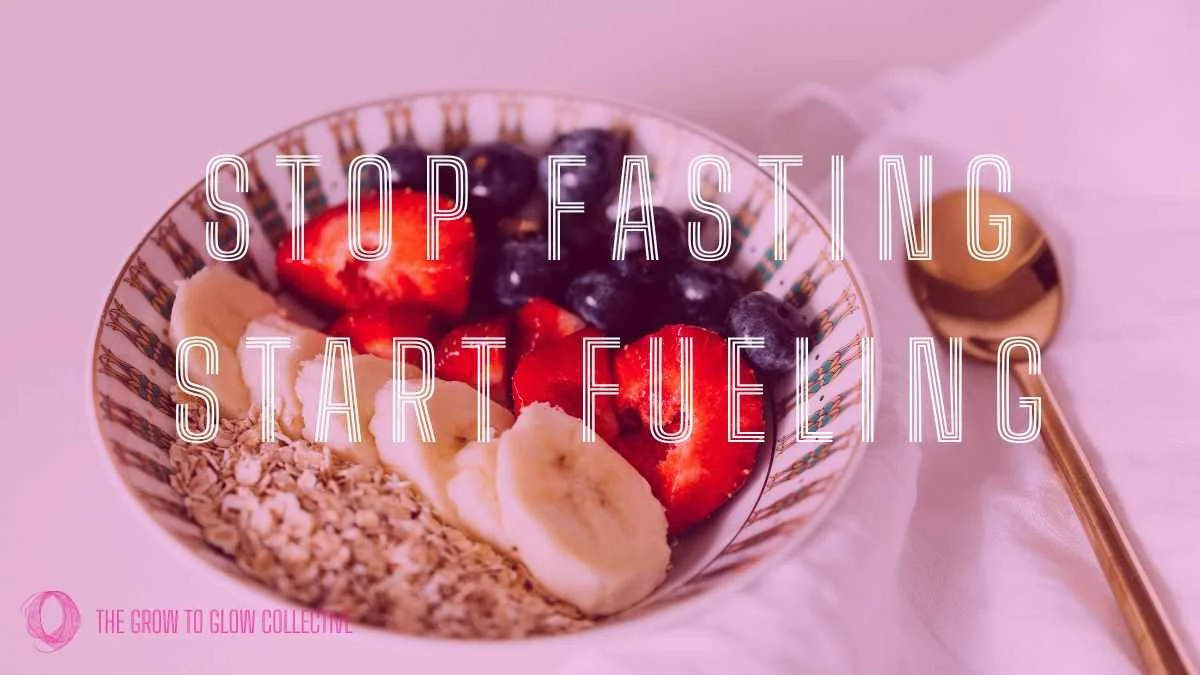
Protein-rich breakfasts like Skyr help you maintain lean muscle (your best metabolic ally), balance cortisol and blood sugar, support thyroid and hormone metabolism, and keep you full and focused without cravings or mood dips.
Here’s how your morning can look — powerful, nourished.
My Fiber-Boosted Glow Breakfast Bowl:
200 grams of Skyr, 2 tablespoons of oats or quinoa flakes, 1 tablespoon of mixed nuts and seeds, a handful of berries, seasonal fruits, apple or pear with peel. Pls add: chias seeds (10gr fiber per 2 tablespoons), grounded flaxseeds (3-4gr of fiber per tablespoon), cacao nibs (4-5gr of fiber per tablespoon), oat bran (4-5 gr fiber per 2 tablespoons)
+ half a grapefruit or a small glass of fresh juice
+ coffee, espresso or cappuccino your style, but no sugar
It’s fast, balanced, and science-backed — the perfect mix of protein, fiber, and glow.
One word on fiber:
Most women underestimate how much fiber they actually need — and how transformative it is for blood sugar, hormones, and satiety.
According to a recent review in midlife/post-menopausal women, one recommendation is 30–45 g of total dietary fiber per day, mostly from whole grains and plant foods.
Most women eat significantly less! If you currently get, say, 15 g/day (many women do), suddenly jumping to 40 g could cause bloating, gas or GI discomfort. Increase fiber slowly and ensure adequate water intake.
Key takeaways:
Skyr is high protein, low lactose, and low sugar — perfect for muscle, satiety, and steady energy. For peri- and menopausal women, breakfast is your hormone anchor. Grapefruit adds a smart biochemical edge, supporting blood sugar and cortisol balance. Fasting may sound powerful but can backfire — protein in the morning is the smarter fat-loss move.
You don’t need detox teas, fasting hacks, or miracle supplements. You need food that actually talks to your hormones.
Eat before you caffeinate. Feed your body like someone who plans to feel amazing for decades.
References & Further Readings:
Skyr & High-Protein Dairy
The Impact of Protein in Post‑Menopausal Women on Body Composition (2024) — Observational cross-sectional study showing that post-menopausal women who consumed higher protein intakes (≥ ~1.2 g/kg bodyweight) had better lean mass, lower body fat.
A higher protein intake at breakfast and lunch is associated with a higher total daily protein intake in community dwelling older adults (2021) — Links higher protein meals early in the day with higher total protein intake in older adults, which is important for mid-life women.
Yazdi FG et al. Long-term daily high-protein drained yoghurt consumption and gut microbiota (2022) — shows how high-protein dairy like Skyr supports metabolism and gut health.
https://www.sciencedirect.com/science/article/pii/S1756464622001591Nutritional Value of Yogurt as a Protein Source (PMC 2023) — overview of dairy proteins, digestion, and muscle support.
https://pmc.ncbi.nlm.nih.gov/articles/PMC10609537/Skyr Is Rich in Important Nutrients – Healthline overview.
https://www.healthline.com/nutrition/skyrSkyr vs Greek Yogurt – The Nutrition Insider comparison of nutrition, texture, and benefits.
https://thenutritioninsider.com/wellness/skyr-vs-greek-yogurt/
Caffeine, Cortisol & Metabolism
Lovallo WR et al. Caffeine stimulation of cortisol secretion across the waking hours (PMC 2005).
https://pmc.ncbi.nlm.nih.gov/articles/PMC2257922/Lane JD et al. Metabolic and hormonal effects of caffeine (2007).
https://www.sciencedirect.com/science/article/abs/pii/S0026049507002752Effects of Coffee Consumption on Glucose Metabolism: A Systematic Review (2019).
https://pmc.ncbi.nlm.nih.gov/articles/PMC6544578/What Happens to Your Cortisol When You Drink Coffee – Verywell Health.
https://www.verywellhealth.com/does-coffee-increase-cortisol-11795879
Grapefruit & Cortisol Metabolism
Effects of Grapefruit Juice on Cortisol Metabolism in Healthy Adults (PubMed).
https://pubmed.ncbi.nlm.nih.gov/25265455/Grapefruit Juice and Licorice Increase Cortisol Availability in Patients with Addison’s Disease (Oxford Academic).
https://academic.oup.com/ejendo/article-abstract/165/5/761/667696711β-HSD2 Activity Is Affected by Grapefruit Juice and Intense Muscular Work (PMC).
https://pmc.ncbi.nlm.nih.gov/articles/PMC10522063/
Protein-Rich Breakfast, Body Composition & Blood Sugar
Leidy HJ et al. A high-protein breakfast prevents body fat gain through changes in daily intake and diet quality (Obesity2015).
https://onlinelibrary.wiley.com/doi/full/10.1002/oby.21185A Dairy-Based, Protein-Rich Breakfast Enhances Satiety – Journal of Dairy Science (2023).
https://www.journalofdairyscience.org/article/S0022-0302%2823%2902014-3/fulltext7 Reasons You Should Start Your Day with Protein – Real Simple (popular summary).
https://www.realsimple.com/reasons-you-should-always-start-your-day-with-protein-11753560
Cortisol, Blood Sugar & Hormones
How Does Cortisol Affect Blood Sugar Levels? – Healthline.
https://www.healthline.com/health/diabetes/cortisol-and-blood-sugar
Midlife Women, Hormones & Metabolic Health
Woods NF et al. Cortisol Levels During the Menopausal Transition and Early Postmenopause (PMC 2010).
https://pmc.ncbi.nlm.nih.gov/articles/PMC2749064/Dietary Protein Intake in Midlife in Relation to Healthy Aging (2024 Cohort Study).
https://pmc.ncbi.nlm.nih.gov/articles/PMC10884611/Caffeine and Stress: Implications for Risk, Assessment, and Behavior (2021 Review).
https://pmc.ncbi.nlm.nih.gov/articles/PMC8101832/Fenster L et al. Caffeinated Beverage Intake and Reproductive Hormones Among Women (2012).
https://pmc.ncbi.nlm.nih.gov/articles/PMC3260075/Cortisol Response to Coffee, Tea, and Caffeinated Drinks: A Review – Endocrine Abstracts.
https://www.endocrine-abstracts.org/ea/0110/ea0110p151